
Summit Summary
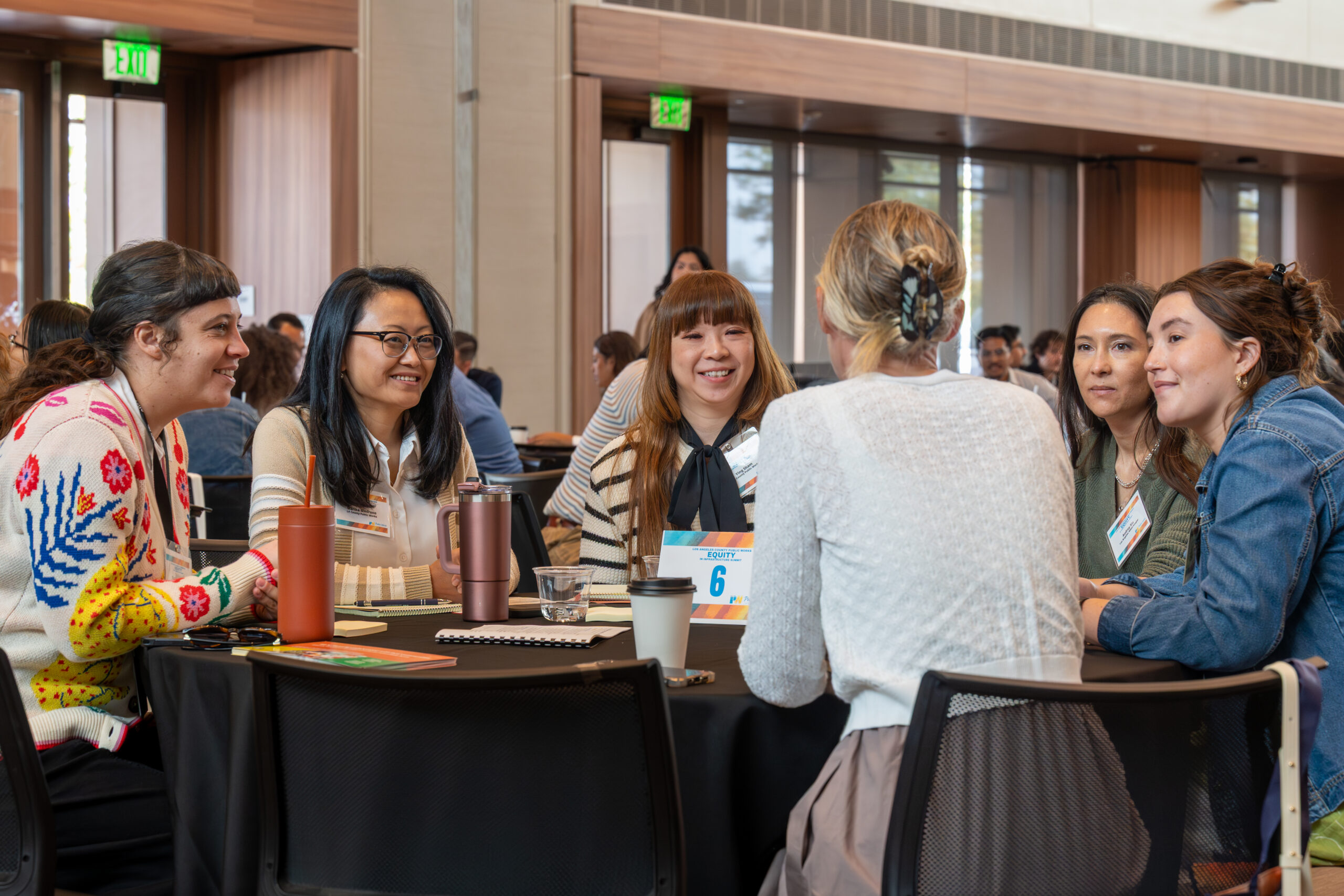
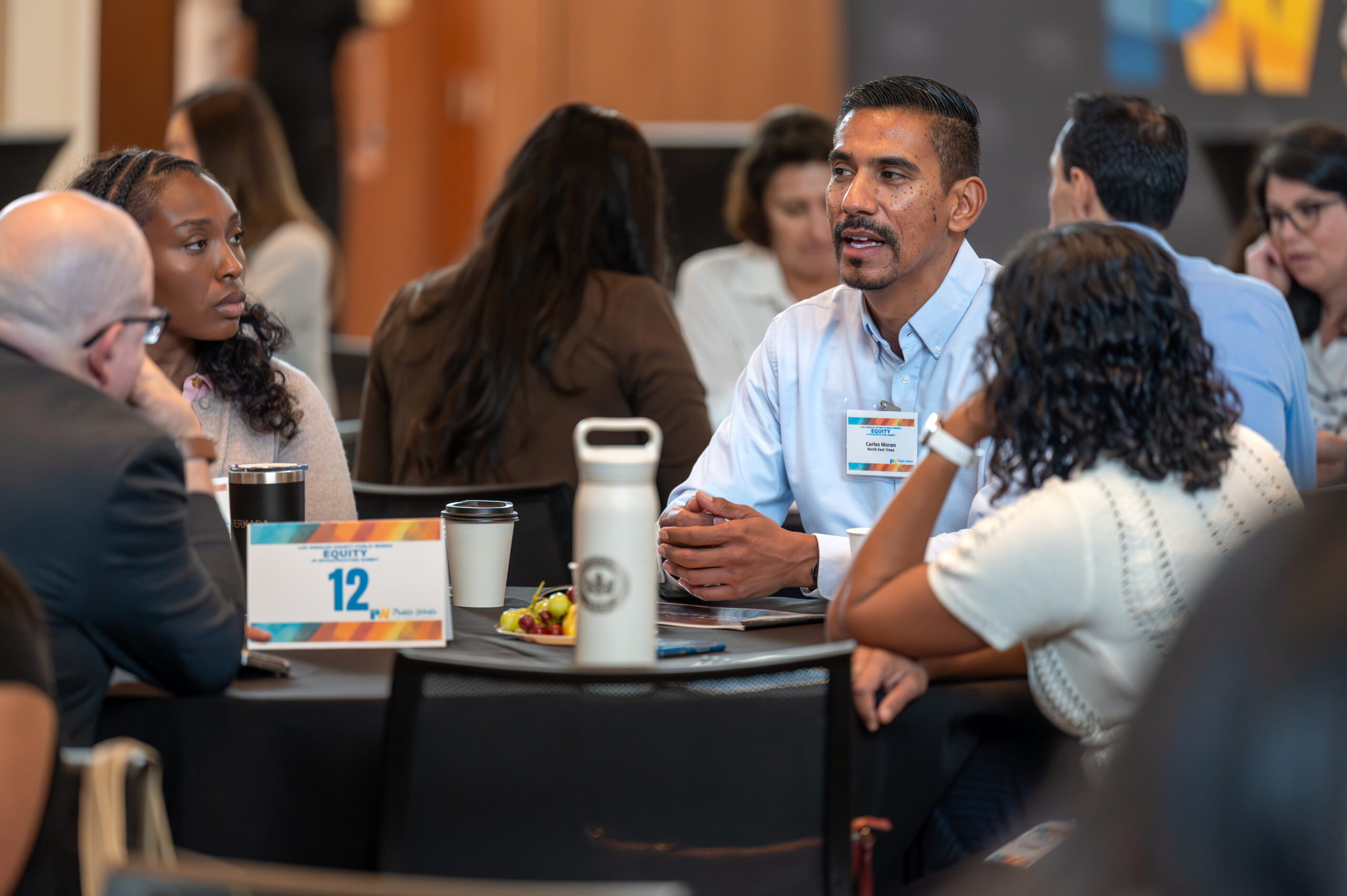
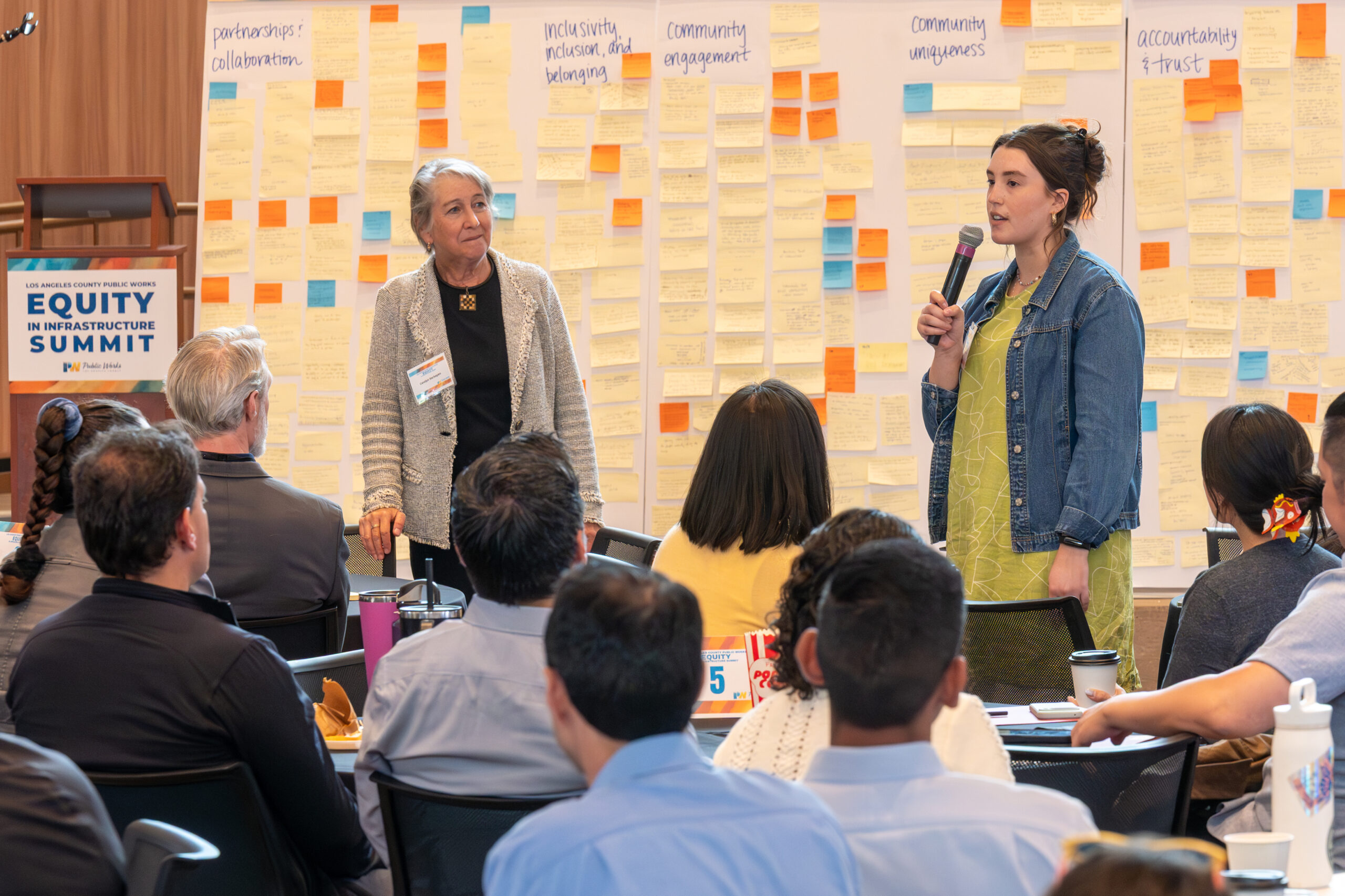
On June 3, 2026, Public Works hosted the Equity in Infrastructure Summit (Summit) at the Magic Johnson Recreation Center. The Summit brought together approximately 100 representatives from community-based organizations (CBO), partner agencies, County departments, as well as other public stakeholders to help shape how the Equity in Infrastructure Initiative will be planned, implemented, evaluated, and improved over time. Through two facilitated breakout sessions, a large group discussion with all attendees, and notetaking completed by Summit staff at each discussion table, the Summit generated over 900 individual pieces of feedback that addressed various stages of infrastructure planning and delivery. Feedback gathered during discussions at the Summit is intended to directly inform how Framework strategies are prioritized, sequenced, and linked to specific implementation actions.
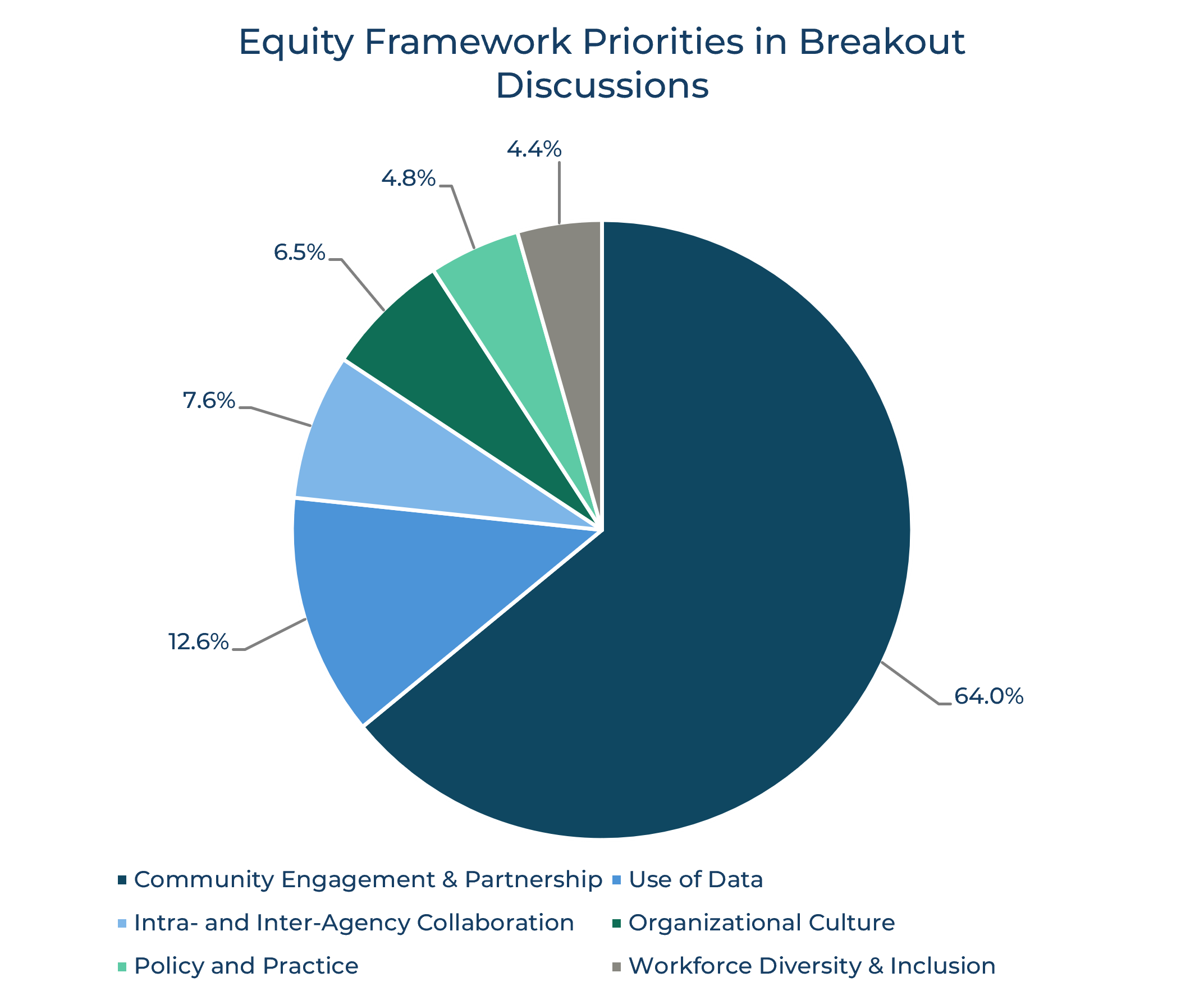
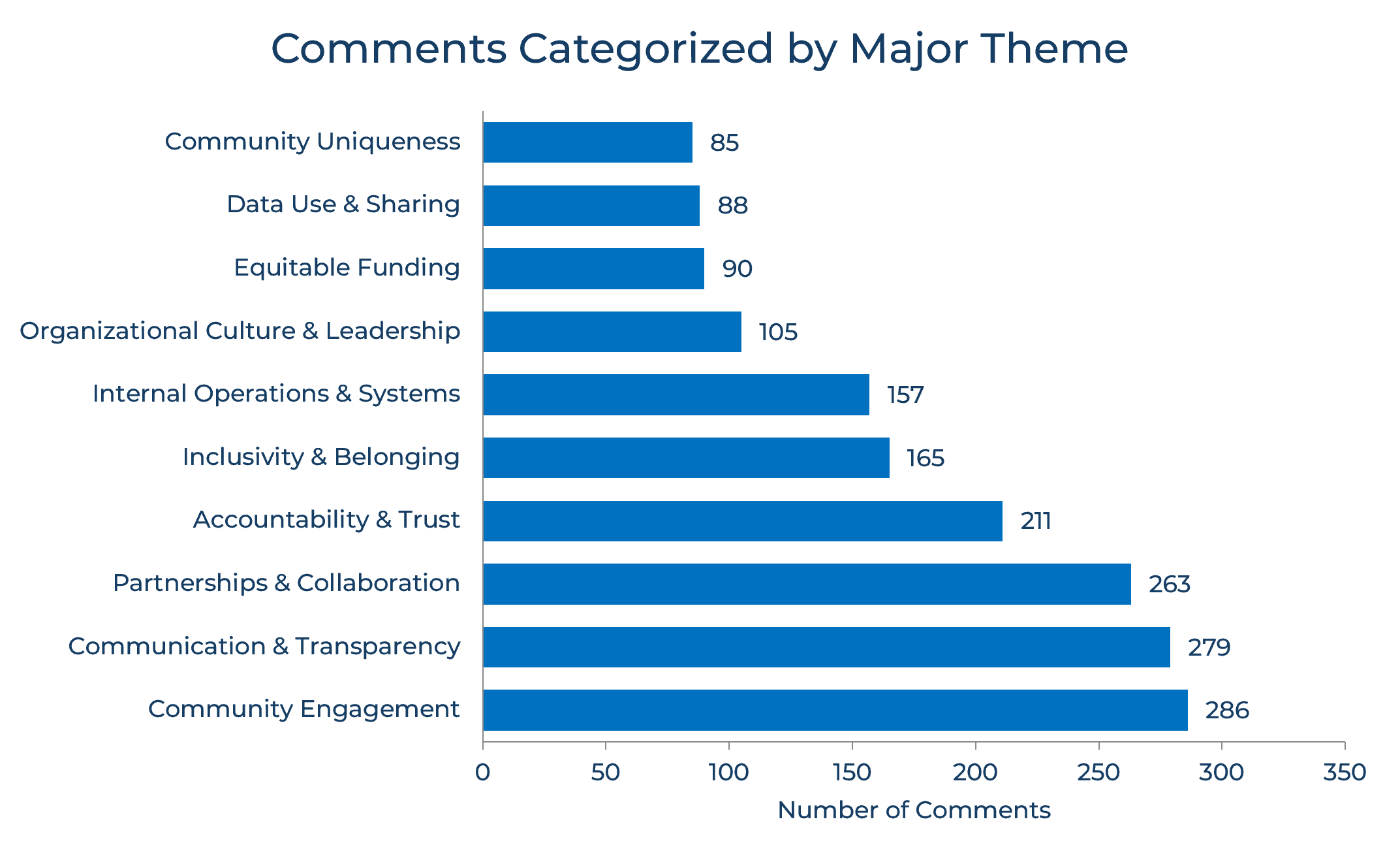
This report organizes that feedback into ten major themes and connects it to the Public Works Equity Framework’s six priority areas. The Equity Framework priority that attendees spoke to most often was Community Engagement and Partnership, representing 64% of all feedback collected. Community Engagement, Communication and Transparency, and Partnership and Collaboration were the major themes most frequently commented on during discussions.

What We Heard
We collected a total of 901 comments at the Equity Summit. We found that:
- 761 comments spoke to specific breakout session themes (“Major Themes”)
- 140 comments spoke to specific outcomes or opportunity areas (e.g., housing or green spaces) that attendees wanted prioritized rather than Major Themes.
We looked at the 761 comments that connected to at least one major theme and used the frequency of references to each priority and theme to create the figures below.
We found that many comments were categorized under multiple priorities and themes at once, which highlighted that an effective approach to implementation would likely require addressing all six equity priorities simultaneously to some degree. These overlaps are included in our counts for each priority and theme, meaning that the total number of comments categorized across all priorities and themes is higher than the total number of comments collected.”
“Educate and train Public Works staff on why the expertise of CBOs, tribal entities, NGOs is variable and intrinsic to implementing the Framework and how to work with those groups towards mutually beneficial relationship building.”
How we will prioritize:
“Conduct more community meetings, not just tabling events.”
How we will prioritize:
Prioritize efforts to help Public Works staff identify and keep track of community engagement opportunities, diversify their community engagement efforts, understand community needs, make community meetings more accessible, and compile feedback collected at community events. This strategy will initially involve development of a community events dashboard (Framework strategies 1.3 and 2.5).
“Community meetings having appropriate language access/translations and allow for clear channel to provide feedback.”
How we will prioritize:
Prioritize efforts to help Public Works staff identify and keep track of community engagement opportunities, diversify their community engagement efforts, understand community needs, make community meetings more accessible, and compile feedback collected at community events. This strategy will initially involve development of a community events dashboard (Framework strategies 1.3 and 2.5).
“De-silo infrastructure: Between departments, between cities, and between issues. We cannot just focus on one issue; fire is not the only major threat, but so is water supply and extreme heat.”
How we will prioritize:
Accelerate efforts to coordinate with other County departments and infrastructure agencies on community engagement. These efforts will involve working together to identify community needs and coming up with inter-agency infrastructure solutions that address a wider range of community needs (Framework strategy 5.4).
Feedback Overview
Equity Framework Priorities
Equity Summit Discussion Themes
Implementation Challenges
- Scale and complexity of County government: Attendees expressed that it can be challenging to understand how the County operates, what each department does, and how the County plans to meet the unique needs of communities spread out across such a large and diverse geographic area.
- Capacity constraints: Attendees highlighted challenges around having enough staff capacity to maintain basic operations while improving services to achieve more equitable outcomes.
- Funding challenges: Attendees voiced concerns regarding the limited funding that is available specifically to advance equity work.
- Community safety: Attendees often highlighted the importance of creating safe environments for dialogue with community members, particularly for vulnerable communities.
- Department and jurisdiction silos: Attendees voiced a need to understand the services and jurisdictions of the various agencies they receive services from. County staff and agency representatives expressed a need to work together and coordinate where their work overlaps.
Desired Outcomes & Opportunity Areas
There were 140 comments that named specific outcomes or opportunity areas. These comments typically named specific types of infrastructure that attendees wanted to see prioritized during implementation. Common examples of desired outcomes and opportunity areas were:
- Climate resilience & urban cooling: Attendees requested shade trees, solar panels at public facilities, and other infrastructure that builds resilience in communities that are especially vulnerable to extreme heat.
- Green space & community gathering spaces: Attendees asked Public Works to prioritize parks and other public gathering spaces where community members feel safe and feel a sense of belonging.
- Protection from environmental hazards: Attendees encouraged Public Works to track community vulnerabilities to environmental hazards, such as hazardous waste.
From Feedback to Framework Implementation

Public Works plans to provide continuous Framework implementation updates through its Annual Equity Framework Progress Report. Findings from this report will shape Public Works’ Equity Framework implementation plan. Given the emphasis that attendees placed on the major themes of Community Engagement, Communication and Transparency, and Partnerships and Collaboration, Public Works will prioritize Framework strategies related to Community Engagement and Partnership that build the agency’s capacity to understand community needs and take action to address them. Strategies that will be prioritized include:
- Equity Framework Strategy 1.3, which involves development of a community engagement dashboard that staff will use to compile and share information about events and community engagement opportunities. Continuous check-ins with CBOs and residents across the County will be needed to ensure that all communities receive opportunities to voice their unique needs and have them met.
- Framework Strategy 1.4, which involves working in close partnership with ARDI to shape the County-wide equitable community engagement guidelines that they are developing. This strategy will also involve working with different communities to understand their specific needs so that the community engagement guidelines equip staff to engage a wide range of communities.